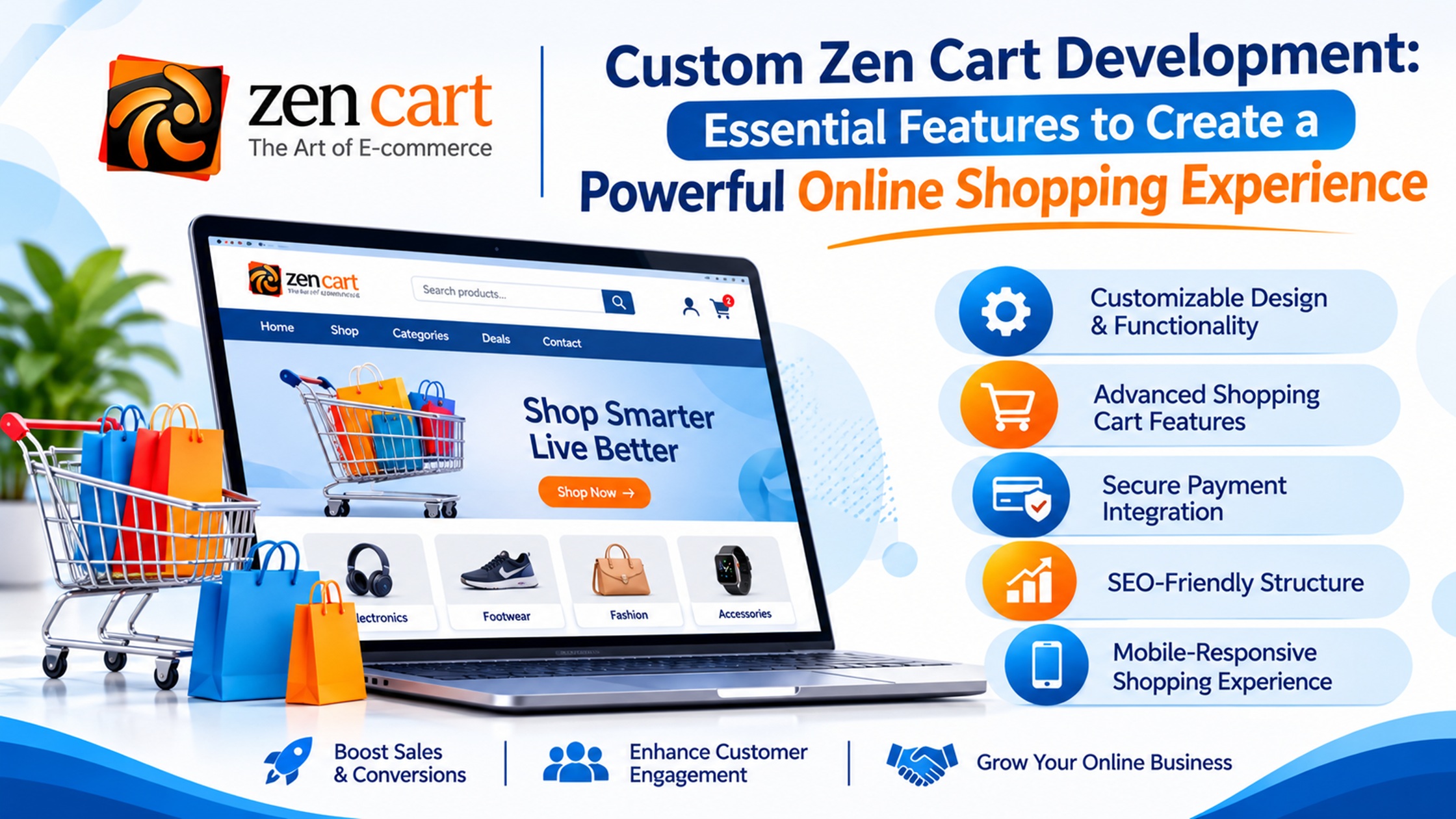
Zen Cart is an open-source eCommerce platform that provides businesses with the flexibility to manage products, process orders, configure payment methods, and customize storefront functionality. With the right development approach, businesses can transform a standard online store into a personalized shopping destination that supports long-term growth.
Let’s explore the essential features, benefits, and development considerations that help create a powerful eCommerce experience.
1. Responsive and Mobile-Friendly Store Design
Mobile commerce continues to influence how customers discover products and complete purchases. A significant number of shoppers browse online stores using smartphones and tablets. Therefore, having a responsive website is essential for maintaining customer engagement and improving conversions.
A well-designed Zen Cart store should automatically adjust its layout, images, navigation, and content according to different screen sizes.
Important responsive design elements include:
- Mobile-friendly navigation menus.
- Readable product descriptions and pricing.
- Touch-friendly buttons and product filters.
- Optimized product images.
- Easy shopping cart access.
- Easy-to-use checkout forms.
A consistent shopping experience across desktops, tablets, and smartphones helps customers interact with your store conveniently, regardless of the device they use.
2. Personalized Storefront Customization
Every eCommerce business has different branding requirements, product categories, and customer expectations. A generic storefront may not communicate a company’s identity or provide the shopping experience its customers expect.
Custom Zen Cart Development allows businesses to create personalized storefronts that reflect their brand identity and commercial objectives.
Developers can customize:
- Website layouts and color combinations.
- Homepage banners and promotional sections.
- Product listing and detail pages.
- Navigation structures and category layouts.
- Custom landing pages.
- Shopping cart and checkout interfaces.
A visually appealing storefront creates a positive first impression and helps businesses establish brand recognition. More importantly, a customer-focused design makes it easier for visitors to discover products and navigate the purchasing journey.
3. Advanced Product Management Features
Product management is one of the most important aspects of running an online store. Businesses with extensive product catalogs need efficient tools to organize inventory, update product information, and manage product variations.
Zen Cart offers product management capabilities that can be extended to meet specific business requirements.
Essential product management features include:
- Product categorization and subcategories.
- Product attributes and variations.
- SKU and inventory management.
- Product pricing and special offers.
- Product images and descriptions.
- Related product recommendations.
- Stock availability notifications.
For example, a clothing retailer may need product variations based on size, color, and material. Similarly, an electronics store may require detailed specifications, warranty information, and compatible accessories.
A properly configured product management system simplifies store administration while helping customers make informed purchasing decisions.
4. Secure and Flexible Payment Gateway Integration
A smooth and secure payment experience is essential for building customer trust. If customers encounter complicated payment procedures or limited payment options, they may abandon their shopping carts.
An effective Zen Cart store should support payment methods that match its target audience and business model.
Popular payment integration options include:
- Credit and debit card payments.
- PayPal.
- Bank transfers.
- Digital wallets.
- Region-specific payment gateways.
- Cash on delivery, where applicable.
Security should remain a priority throughout the payment process. Businesses should use HTTPS, maintain updated payment integrations, and work with reputable payment service providers.
PCI DSS compliance requirements should also be considered when handling payment card information. Using a hosted payment provider can help reduce the amount of sensitive payment data managed directly by the store.
5. SEO-Friendly Website Architecture
A beautiful online store will not deliver meaningful results if potential customers cannot find it through search engines. Search engine optimization should therefore be included in the development strategy from the beginning.
A search-friendly Zen Cart website makes it easier for search engines to crawl, understand, and index product and category pages.
Important SEO features include:
- Search engine-friendly URLs.
- Unique title tags and meta descriptions.
- Optimized product descriptions.
- Proper heading structures.
- XML sitemap generation.
- Image alt text.
- Canonical URL management.
- Structured data implementation where appropriate.
- Mobile-friendly page layouts.
Custom Zen Cart Development can also help businesses implement technical SEO improvements based on their website structure and marketing objectives.
However, SEO success requires more than technical optimization. High-quality product content, relevant keywords, useful category descriptions, and a strong internal linking structure also contribute to organic visibility.
6. Fast Loading Speed and Website Performance
Website performance directly influences the shopping experience. Customers expect product pages to load quickly, and slow websites can create frustration and increase abandonment rates.
A high-performing Zen Cart store should be optimized to handle customer traffic without unnecessary delays.
Some effective performance optimization techniques include:
- Compressing product images without compromising quality.
- Implementing browser and server-side caching.
- Minimizing unnecessary CSS and JavaScript.
- Using reliable hosting infrastructure.
- Optimizing database queries.
- Reducing unnecessary plugins and extensions.
- Implementing a content delivery network (CDN) where appropriate.
Businesses should regularly evaluate website performance using tools such as Google PageSpeed Insights and monitor Core Web Vitals.
Improved loading speed creates a smoother browsing experience and supports better engagement across devices.
7. Shopping Cart and Checkout Optimization
The checkout process is one of the most critical stages of the customer journey. Even interested shoppers may leave without completing an order if the purchasing process is confusing or unnecessarily complicated.
An optimized Zen Cart checkout experience should make purchasing simple and convenient.
Consider implementing the following features:
- Guest checkout functionality.
- Simplified checkout forms.
- Multiple shipping options.
- Transparent tax and delivery calculations.
- Clear order summaries.
- Secure payment processing.
- Order confirmation notifications.
- Mobile-friendly checkout pages.
Reducing unnecessary checkout steps can help minimize friction and encourage customers to complete their purchases.
Businesses should also provide clear information about shipping costs, return policies, and delivery timelines before customers finalize their orders.
8. Third-Party Integration and Business Automation
Modern eCommerce businesses often rely on multiple software applications to manage their daily operations. Connecting an online store with external tools can reduce manual work and improve operational efficiency.
Zen Cart can be extended through suitable integrations and custom development.
Useful integration possibilities include:
- CRM Integration: Connect customer information with customer relationship management systems to organize leads, customer profiles, and communication activities.
- Inventory Management: Synchronize product availability and stock information across different sales channels.
- Shipping Integration: Connect shipping providers to calculate delivery charges, generate shipping labels, and track shipments.
- Email Marketing: Integrate email marketing platforms to manage newsletters, promotional campaigns, and customer notifications.
- Analytics Integration: Use analytics tools to understand website traffic, customer behavior, product performance, and conversion trends.
These integrations help businesses create a more connected eCommerce ecosystem and manage their operations efficiently.
9. Advanced Security and Regular Maintenance
Website security is essential for protecting customer information, business data, and online transactions. An outdated eCommerce platform or poorly maintained extension can expose an online store to unnecessary security risks.
Businesses should establish a regular maintenance strategy that includes:
- Installing security updates and patches.
- Using strong administrator passwords.
- Restricting administrative access.
- Implementing regular website backups.
- Monitoring suspicious activities.
- Keeping third-party extensions updated.
- Using secure hosting environments.
- Reviewing user permissions.
Custom Zen Cart Development should follow secure coding practices and consider the platform’s compatibility requirements before introducing new features or extensions.
Regular security audits and maintenance help businesses maintain website reliability while protecting customer confidence.
10. Scalable Architecture for Future Business Growth
An eCommerce website should be capable of adapting as a business expands. Increasing product catalogs, growing customer traffic, and new operational requirements can place additional demands on the website.
A scalable Zen Cart solution should accommodate future improvements without requiring a complete redesign.
Businesses should consider:
- Flexible product and category structures.
- Efficient database management.
- Hosting resources that support growing traffic.
- Integration with additional business applications.
- Custom functionality for new requirements.
- Performance monitoring and optimization.
Planning for scalability during development makes it easier to introduce new features as business requirements evolve.
Why Choose Custom Zen Cart Development for Your eCommerce Business?
Every online business has unique requirements. While ready-made eCommerce solutions can provide basic functionality, they may not always offer the flexibility needed for specialized workflows or advanced business operations.
Choosing Custom Zen Cart Development offers several advantages:
- Greater Flexibility: Customize website functionality according to specific business requirements.
- Improved User Experience: Create intuitive navigation and simplified shopping processes.
- Brand Consistency: Develop a storefront that reflects your business identity.
- Better Integration: Connect the store with payment gateways, shipping services, CRM systems, and other applications.
- Scalable Functionality: Introduce new features as your business grows.
- Operational Efficiency: Automate repetitive tasks and simplify store management.
- SEO Opportunities: Build a website structure that supports search engine optimization.
The key is to select features that genuinely support your business objectives instead of adding unnecessary functionality.
How to Choose the Right Zen Cart Development Partner
Selecting an experienced development partner is an important step toward building a successful online store. The right team should understand both the technical aspects of Zen Cart and the practical requirements of eCommerce businesses.
Before choosing a development company, consider these factors:
- Technical Expertise: Evaluate the team’s experience with Zen Cart customization, PHP development, database management, and integrations.
- Portfolio: Review previous eCommerce projects to understand the quality of their work.
- Customization Capabilities: Ensure they can develop features according to your business requirements.
- Security Knowledge: Check whether they follow secure coding and maintenance practices.
- Post-Launch Support: Confirm that ongoing maintenance, troubleshooting, and technical assistance are available.
- Communication: Choose a team that understands your goals and provides clear project updates.
A reliable development partner can help you plan, build, test, and maintain an eCommerce website that supports your long-term business strategy.
Conclusion
Building a successful online store requires the right combination of functionality, performance, security, and user experience. From responsive design and advanced product management to secure payment processing and third-party integrations, every feature contributes to creating a convenient shopping environment.
Custom Zen Cart Development provides businesses with the flexibility to create personalized eCommerce solutions that align with their operational needs and customer expectations. By investing in the right features, following secure development practices, and planning for future scalability, businesses can build an online shopping platform that is ready to support sustainable growth.
Whether you are launching a new online store or upgrading an existing eCommerce website, choosing the right development strategy can help you deliver a better shopping experience and build lasting customer relationships.