
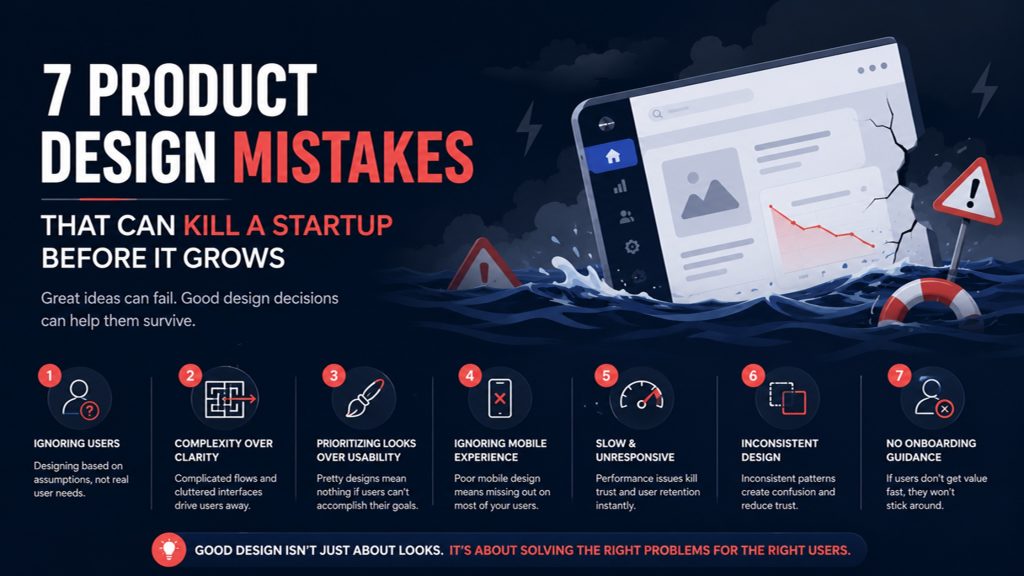
Launching a startup is an exciting journey filled with bold ideas, ambitious goals, and endless possibilities. But while founders focus on innovation and growth, one critical factor can easily be overlooked: product design. Great product design goes far beyond attractive visuals—it shapes usability, builds trust, and influences how customers experience your brand. Understanding common product design mistakes early can help startups avoid costly setbacks and create products that truly connect with their target audience.
A well-designed product not only meets user needs but also elevates their experience and satisfaction. Conversely, poor design choices can lead to costly mistakes that stifle growth before it even begins. Understanding this delicate balance is essential for any entrepreneur looking to carve out their space in today’s competitive market.
In this blog post, we’ll delve into 7 product design mistakes that could spell disaster for startups eager to succeed. By recognizing these pitfalls early on, you can steer clear of common traps and set yourself up for lasting impact in your industry. Let’s dive into what not to do!
Not Understanding The Target Market And Their Needs
Biggest product design mistakes are failing to understand the target market. This mistake can cripple a startup before it even takes off.
When businesses skip thorough research, they miss out on what their audience truly wants. Preferences, pain points, and habits all matter.
Designing a product without insight into these factors leads to misalignment with potential customers. Imagine investing time and resources into something no one wants or needs.
It’s crucial for startups to engage directly with their audience through surveys or interviews. Gathering this invaluable feedback shapes not only the product but also its features and marketing approach.
Without knowing your users, you risk creating solutions that solve problems no one has—or worse yet, ignore existing ones altogether. Understanding your target market isn’t just helpful; it’s essential for survival in today’s competitive landscape.
Poor User Experience And Interface Design
User experience (UX) and interface design are critical to any product’s success. A poorly designed interface can frustrate users, leading them to abandon your product altogether. If it’s not intuitive, potential customers will quickly lose interest.
Imagine navigating a maze without a map. Confusing layouts and unclear functionality create this same sense of disorientation for users. They want seamless interactions that feel natural.
Colors, fonts, and overall aesthetics play significant roles as well. A cluttered screen or unappealing visuals can deter even the most interested user from exploring further.
Engagement drops when users encounter slow load times or complicated processes. Every extra click feels like an obstacle in their journey, pushing them closer to competitors who offer smoother experiences.
Prioritizing UX means investing time in understanding how real people interact with your product—and designing accordingly is non-negotiable when aiming for growth.
Overcomplicating The Product
Startups often fall into the trap of overcomplicating their products. In an effort to impress potential users, they pack features that may not be necessary.
Simplicity is key in product design. A cluttered interface can overwhelm customers and deter them from using your product at all. Users appreciate a straightforward experience where they can easily understand how to navigate and utilize features without confusion.
Adding too many bells and whistles might seem appealing initially, but it can lead to frustration. This complexity can also slow down performance, which drives users away rather than attracting them.
Focus on delivering core functionalities that solve real problems for your target market. By honing in on what truly matters, you create a more user-friendly experience that fosters loyalty and satisfaction among customers.
Lack of Proper Testing And Feedback
Testing is a crucial step in product design that many startups overlook. It’s not just about launching something; it’s about refining and improving.
Without proper testing, you’re navigating blind. You might think your product is perfect, but real users will provide insights that can drastically change its effectiveness. Feedback from potential customers uncovers issues you may have missed.
Ignoring this phase can lead to costly mistakes down the line. Bugs, usability challenges, or even misunderstandings of how users interact with your product often emerge only after it hits the market.
A robust feedback loop allows for iterative improvements. Engaging users early on means you can adapt before it’s too late. This approach fosters loyalty and trust among your audience while enhancing user satisfaction.
Investing time in thorough testing pays dividends far beyond initial launch metrics—it sets a precedent for future development cycles as well.
Ignoring Scalability And Future Growth Potential
Scalability is often an afterthought in product design, yet it’s crucial for sustainable growth. Startups that focus solely on their current functionality may find themselves in a tight spot as demand increases.
Failing to plan for scalability can lead to performance issues down the line. If your product can’t handle more users or data seamlessly, you might lose customers when they need you most.
Designing with future growth in mind means considering how features will adapt over time. This foresight allows businesses to pivot easily based on market trends or customer feedback.
Additionally, scalable designs are often more cost-effective. A well-architected product requires fewer resources and adjustments when expanding its user base or introducing new functionalities.
In today’s fast-paced environment, startups must remain agile and responsive to opportunities; ignoring scalability can put them at serious risk of stagnation.
Failing To Differentiate From Competitors
A startup’s success often hinges on its ability to stand out in a crowded market. When a product lacks differentiation, it can easily get lost among competitors.
Consumers are bombarded with choices daily. If your product looks and feels similar to others, why would they choose yours? Unique value propositions capture attention and drive interest.
Failing to carve out a niche means missing opportunities for brand loyalty as well. Customers gravitate towards products that resonate with their needs or values.
Moreover, being just another option limits pricing flexibility. Without distinct features or benefits, startups may find themselves competing solely on cost—a race that’s hard to win.
Investing time in understanding what sets your product apart is crucial. It’s not just about functionality; it’s also about the story you tell and how you connect emotionally with your audience.
Adding Too Many Features Too Soon
One of the most common startup design traps is trying to pack every possible feature into the first version of a product. While having more functionality may seem valuable, an overloaded interface can overwhelm users, make navigation difficult, and distract from the product’s primary purpose. Startups should focus on the core problem they want to solve and prioritize features that deliver immediate value. A simpler, focused product is often easier to understand, test, improve, and scale as real user feedback reveals what additional features are actually needed.
Conclusion: The importance of investing in good product design for startup success
Investing product design mistakes are essential for startup success. It sets the foundation for how your audience interacts with your brand. Well-designed products resonate better with users and can significantly enhance their experience. A thoughtful approach to design addresses user needs, fosters loyalty, and encourages word-of-mouth referrals.
The right design can make all the difference in a competitive market. Startups that prioritize usability and aesthetics are more likely to capture attention and thrive amidst challenges. By learning from common pitfalls like misunderstanding target markets or failing to differentiate from competitors, entrepreneurs can carve out a unique space for themselves.
Strong product design not only adds value but also reflects commitment to quality. Investing time and resources into this critical aspect may very well determine whether your startup flourishes or falters on its journey toward growth.