
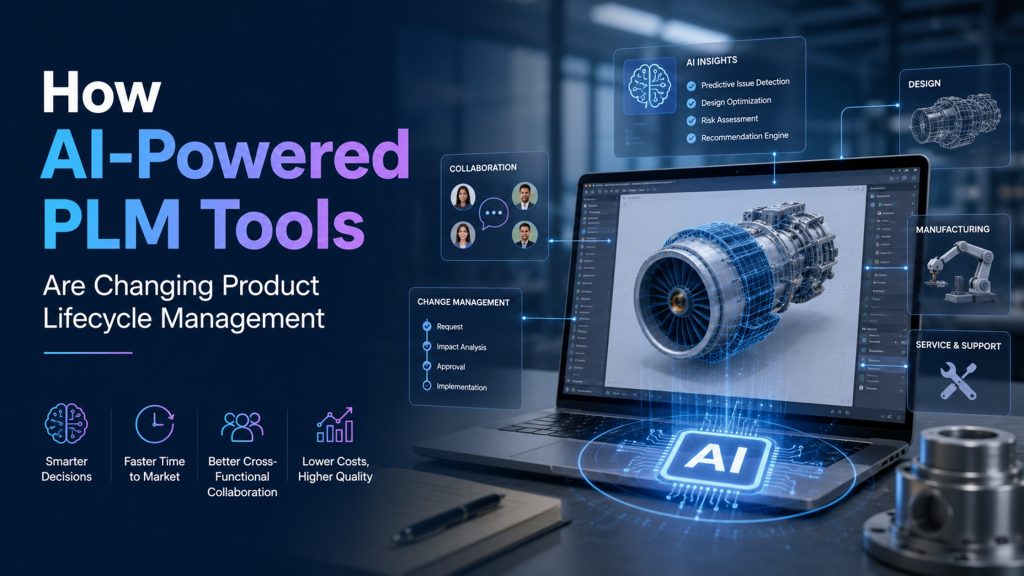
Product Lifecycle Management (PLM) is at the heart of how businesses navigate their product journeys, from inception to retirement. In an age where efficiency and innovation reign supreme, traditional PLM methods are being challenged by a new player: artificial intelligence. With AI technologies reshaping industries across the board, it’s no surprise that they’re also making waves in the world of AI-powered PLM tools.
Imagine streamlining processes, predicting market trends, and enhancing collaboration—all while minimizing costs. Sounds promising, right? That’s precisely what AI-powered PLM tools bring to the table. They transform complex workflows into seamless operations that drive success for businesses large and small. As we dive deeper into this topic, you’ll discover how these intelligent solutions are not just improving existing practices but redefining them entirely.
Join us as we explore the evolution of PLM with AI technology and uncover its myriad benefits. From real-life applications to future potential, let’s dissect what makes custom PLM software a game-changer in today’s competitive landscape.
The Evolution of PLM with AI Technology
The landscape of Product Lifecycle Management (PLM) has undergone a radical transformation thanks to AI technology. Traditional PLM systems often struggled with data silos and manual processes, hindering innovation and efficiency.
Now, AI algorithms analyze vast amounts of product data in real time. This capability enables companies to predict trends, assess risks, and optimize resources more effectively than ever before.
Moreover, machine learning models are enhancing decision-making by providing actionable insights that were previously unattainable. These tools streamline workflows, making collaboration across teams seamless.
As AI continues to evolve, its integration into custom PLM software is becoming crucial for staying competitive. Companies can now adapt quickly to market changes while maintaining high standards in product quality and compliance.
This evolution marks a shift toward smarter solutions that not only support but also drive the entire lifecycle of products from ideation through retirement.
Benefits of AI-Powered PLM Tools
AI-powered PLM tools bring a dynamic shift to product lifecycle management. They enhance efficiency by automating routine tasks, allowing teams to focus on strategic initiatives.
With predictive analytics, these tools forecast trends and consumer demands. This insight enables companies to make data-driven decisions, reducing the risk associated with new product launches.
Collaboration also thrives under AI systems. Teams can access real-time data and insights from various departments seamlessly. This interconnectedness fosters innovation and accelerates time-to-market.
Moreover, AI enhances quality control through machine learning algorithms that identify potential defects early in the development process. Companies save valuable resources while ensuring higher standards for their products.
Customization options available in many AI-based PLM solutions cater to specific industry needs. Businesses can tailor features that align perfectly with their workflows or objectives, ultimately driving growth and success.
Real-Life Applications of AI in PLM
AI is reshaping the landscape of product lifecycle management in remarkable ways. Companies are leveraging AI algorithms to analyze vast amounts of data, providing insights that enhance decision-making processes.
For instance, retailers utilize AI-powered PLM tools to predict trends by analyzing consumer behavior patterns and market demands. This leads to more accurate forecasting and inventory management.
In manufacturing, machine learning optimizes production schedules based on real-time data. This minimizes downtime and enhances operational efficiency.
Another application can be seen in design processes. Designers use AI-assisted software for rapid prototyping, allowing them to iterate concepts quickly while reducing material waste.
Quality control has also transformed with AI technologies. Predictive analytics help identify potential defects early in the production cycle, ensuring higher quality products reach consumers faster than ever before.
Challenges and Limitations of AI-Powered PLM
Implementing AI-powered PLM tools is not without its hurdles. One significant challenge lies in data quality. Poor or inconsistent data can lead to inaccurate predictions, undermining the very benefits these systems aim to deliver.
Integration with existing software ecosystems presents another obstacle. Many organizations rely on legacy systems that may not easily adapt to new AI technologies. This compatibility issue can slow down implementation and frustrate teams eager for innovation.
Additionally, there’s a skills gap in many industries. Not all employees are equipped with the technical know-how needed to harness AI capabilities fully. Training staff can be time-consuming and costly.
Ethical considerations around data privacy cannot be overlooked. Companies must navigate regulations carefully while ensuring they use consumer information responsibly within their PLM processes.
Future Outlook for AI in PLM
The future of AI in PLM is brimming with potential. As technology advances, the integration of machine learning and data analytics will become even more sophisticated.
Companies can expect to see enhanced predictive capabilities that streamline processes from design to manufacturing. This means quicker iterations and a significant reduction in time-to-market for products.
Additionally, AI-driven insights will help teams make informed decisions based on real-time data analysis. As a result, organizations can adapt to market changes faster than ever before.
Personalization will also play a crucial role in shaping PLM tools. Tailored solutions could cater specifically to industry needs, leading to increased efficiency.
Moreover, collaboration between teams will be revolutionized through intelligent automation. With seamless communication channels powered by AI, cross-functional teamwork may reach new heights.
As these advancements unfold, we can anticipate an exciting era where innovation thrives at every stage of the product lifecycle.
Conclusion
The integration of AI-powered PLM tools is reshaping the landscape of product lifecycle management. These innovations streamline workflows, enhance collaboration, and provide valuable insights that were once unattainable. As companies embrace custom PLM software tailored to their specific needs, they gain a competitive edge in bringing products to market faster and more efficiently.
While challenges remain—such as data privacy concerns and the need for advanced training—the potential benefits far outweigh these obstacles. The future looks promising as AI continues to advance, offering even smarter solutions for managing every stage of a product’s life cycle.
As organizations navigate this evolving terrain, staying informed about new technologies will be crucial. Embracing AI-driven strategies may well become not just an advantage but a necessity in the fast-paced world of product development.