
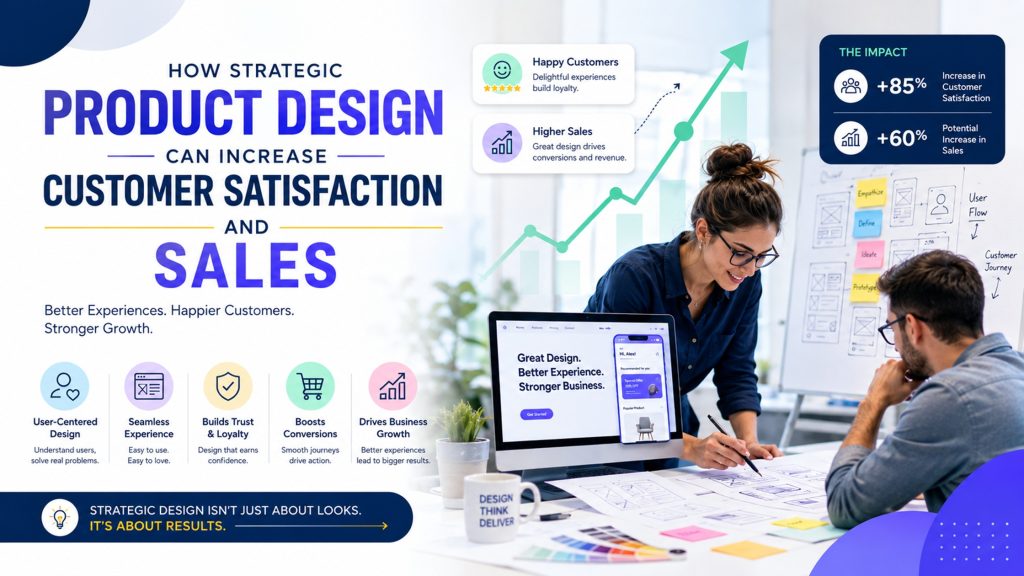
Every successful product tells a story long before a customer makes a purchase. It begins with thoughtful research, understanding user behavior, and designing solutions that solve real problems. Strategic product design goes beyond creating an attractive interface or visually appealing product—it aligns customer needs with business objectives to deliver meaningful experiences that inspire trust and loyalty.
In today’s competitive marketplace, customers have countless options at their fingertips. They quickly abandon products that are confusing, difficult to use, or fail to meet their expectations. Businesses that invest in strategic product design gain a competitive advantage by creating intuitive, user-centered experiences that increase satisfaction, encourage repeat purchases, and strengthen brand loyalty. The result is not only happier customers but also improved conversion rates, stronger customer retention, and sustainable revenue growth.
In this blog, we’ll explore how strategic product design influences customer perception, enhances user experience, and directly contributes to increased sales. You’ll also discover the key principles that help businesses transform great ideas into products customers genuinely value and recommend.
Understanding Customer Needs and Preferences
Understanding customer needs and preferences is the cornerstone of strategic product design. It goes beyond basic demographics; it’s about grasping what drives their choices.
Listening to customers reveals valuable insights. Surveys, focus groups, and feedback forms can uncover pain points and desires. Customers often express unarticulated needs that can shape innovative solutions.
Engaging with your audience on social media also provides real-time reactions to products and concepts. Monitoring these interactions helps identify trends before they become mainstream.
Empathy plays a vital role here. Stepping into the customer’s shoes allows designers to envision experiences from their perspective. This alignment fosters loyalty as consumers feel understood.
Creating personas based on research aids in tailoring products more effectively. These profiles guide decisions throughout the design process, ensuring alignment with actual user expectations rather than assumptions alone.
Utilizing Market Research and Data Analysis
Market research is the backbone of strategic product design. It offers insights into customer behavior, preferences, and trends. By tapping into various data sources, businesses can identify what truly resonates with their target audience.
Data analysis takes this a step further. It transforms raw information into actionable strategies. Through tools like surveys, focus groups, and analytics software, companies gather valuable feedback on existing products and potential innovations.
Understanding customer pain points allows designers to create solutions that meet their needs directly. This not only enhances the product’s appeal but also fosters loyalty among consumers who feel heard and valued.
By integrating these research methods early in the design process, brands can stay ahead of competitors while crafting products that genuinely enhance user experience. The fusion of market research with creative vision paves the way for successful outcomes in both satisfaction and sales growth.
Incorporating Functional and Aesthetic Design Elements
Functional and aesthetic design elements are two sides of the same coin in strategic product design. They must work together to create a seamless experience for users.
When functionality drives the design, it ensures that the product meets practical needs. For instance, consider how an ergonomic chair supports posture while enhancing productivity. Functionality isn’t just about utility; it’s also about ease of use.
Aesthetic appeal adds emotional value. Color schemes, shapes, and materials can evoke feelings that resonate with customers. A beautifully designed product can turn heads and attract attention instantly.
Balancing these elements is crucial. An overly complex interface might frustrate users, while a stunning but impractical item may end up unused. The harmonious blend elevates both desirability and usability.
Integrating feedback during development helps refine this balance further. Listening to customer input can lead to innovative solutions that enhance both function and form effectively.
The Importance of User Experience in Product Design
User experience (UX) is a cornerstone of strategic product design. It encompasses every interaction a customer has with your product, from the first glance to repeated usage.
When users navigate a product effortlessly, their satisfaction soars. A seamless experience fosters loyalty and encourages word-of-mouth recommendations.
Good UX focuses on understanding how customers engage with products in real-world scenarios. By prioritizing usability, brands can eliminate frustration points that often lead to abandoned carts or negative reviews.
Moreover, user feedback is invaluable. Incorporating insights allows designers to refine features and enhance functionality continuously.
Visual appeal also plays a vital role in UX. Striking the right balance between aesthetic charm and practical use captivates attention while ensuring ease of access.
Designing for user experience not only boosts satisfaction but ultimately drives sales as well. Happy customers return for more, creating long-term relationships built on trust.
The Impact on Customer Satisfaction and Sales
Strategic product design plays a pivotal role in shaping customer satisfaction. When products meet or exceed expectations, customers feel valued and understood. This connection fosters brand loyalty.
A well-designed product resonates with users on multiple levels, from functionality to aesthetics. The visual appeal draws attention while intuitive features enhance usability. Customers are more likely to recommend products that impress them both visually and practically.
Sales figures often reflect this satisfaction directly. Positive experiences lead to repeat purchases and word-of-mouth referrals. A satisfied customer becomes a brand ambassador without even realizing it.
Moreover, effective strategic product design can distinguish your offerings in a crowded market. It creates an emotional bond that keeps consumers coming back for more, driving sustained revenue growth over time.
Strategies for Implementing Strategic Product Design
To effectively implement strategic product design, start by fostering a culture of collaboration among teams. Encourage designers, engineers, and marketers to share insights and brainstorm ideas together. This synergy can lead to innovative solutions that truly resonate with customers.
Next, prioritize iterative prototyping. Develop early versions of your products and gather feedback swiftly. This approach not only saves time but also helps refine designs based on real user experiences.
Utilizing tools like customer journey mapping is essential as well. Visualizing the entire process from discovery to purchase allows you to identify pain points and areas for improvement.
Don’t forget the significance of continuous learning. Stay updated with industry trends and emerging technologies that could enhance your design strategies in unexpected ways. Embrace flexibility; adapt your processes as needed based on evolving consumer demands or market shifts.
Conclusion
Strategic product design is not just about aesthetics; it’s a comprehensive approach that intertwines customer needs, market analysis, and user experience. By actively engaging with target demographics and understanding their preferences, businesses can create products that resonate deeply with consumers.
Utilizing data-driven insights allows brands to stay ahead of trends and make informed decisions. Incorporating both functional aspects and appealing designs ensures that products are not only useful but also attractive. A seamless user experience enhances satisfaction, leading to loyal customers who advocate for the brand.
Implementing strategic product design requires careful planning and collaboration across teams. Businesses should prioritize innovation while remaining attuned to shifting consumer demands. This commitment can significantly boost customer satisfaction levels and drive sales growth over time.
The journey toward effective strategic product design involves continuous learning and adaptation. Brands willing to invest in this process will ultimately find themselves reaping the rewards—enhanced customer loyalty, increased sales figures, and a stronger market presence.