
1. Understanding How Local SEO Works Without a Physical Office
Traditional local SEO often focuses on businesses with physical storefronts or offices that customers can visit. However, many modern businesses operate differently. Digital agencies, consultants, software companies, contractors, and professional service providers frequently serve customers across multiple cities without maintaining separate offices.
Google’s local search results consider relevance, distance, and prominence. This means businesses cannot automatically rank everywhere simply by publishing location pages. Their service areas, business eligibility, online reputation, and relevance to local searches all matter.
A business can still build geographic visibility by:
- Targeting relevant city-specific search queries.
- Creating genuinely useful location landing pages.
- Clearly communicating its service coverage.
- Developing relevant local backlinks and brand mentions.
- Maintaining accurate business information online.
- Publishing content that addresses local customer requirements.
The objective is to demonstrate that your business genuinely serves customers in those locations rather than pretending to have offices where none exist.
2. Build Strategic City Landing Pages
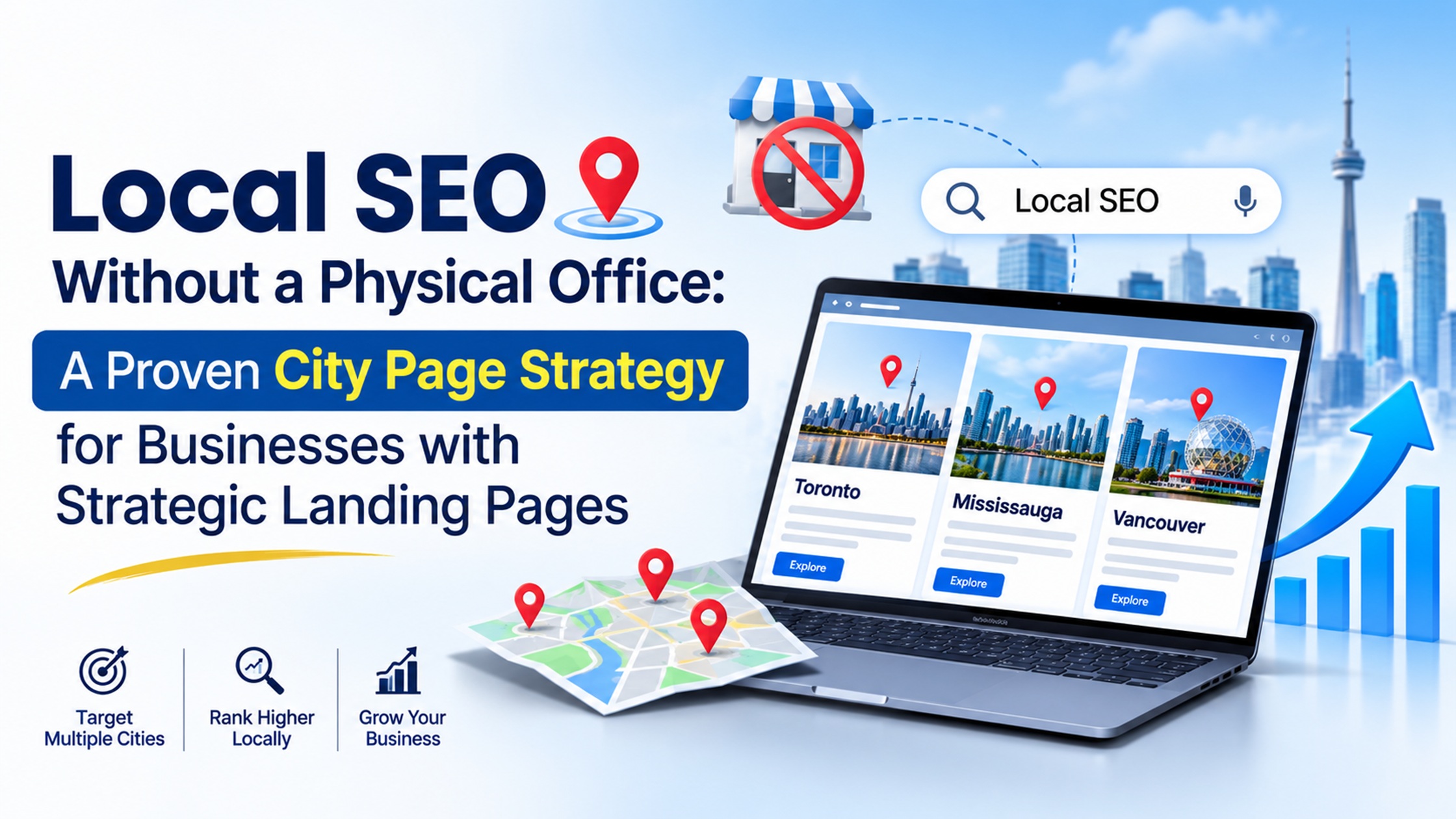
City landing pages are among the most useful elements of a multi-city SEO strategy. These pages help search engines understand which locations your business serves and allow potential customers to find services relevant to their geographic needs.
For example, a web development company operating from one location might target customers in:
- Web Design Services in San Jose
- Web Development Services in Los Angeles
- SEO Services in New York
- Digital Marketing Services in Chicago
Instead of creating one generic service page, businesses can develop individual landing pages that address the needs of customers in each target market.
However, every page should offer unique value. Simply replacing one city name with another creates repetitive content that provides little benefit to visitors.
A strong city landing page should include:
- A unique page title and meta description.
- City-specific service information.
- Relevant customer challenges and solutions.
- Local project examples or case studies, where available.
- Testimonials from actual customers in that area.
- Clear contact information and service coverage.
- Relevant internal links to related services.
Well-structured city pages improve the relevance of your website and create more opportunities to connect with potential customers.
3. Research Local Keywords Before Creating Pages
Keyword research should come before landing page development. Businesses need to understand how potential customers search for their services in different locations.
For example, someone searching for web design services in San Diego may use different search phrases than someone searching for a digital marketing agency in Boston.
Start by identifying your main service keywords and combining them with relevant city names.
Some keyword variations include:
- Best web design company in [City]
- SEO agency in [City]
- Affordable website development in [City]
- Digital marketing services in [City]
- Professional software development company in [City]
Use keyword research tools to evaluate search demand, competition, and search intent.
It is also important to understand the difference between informational and commercial searches. Someone searching for “what is website development” needs educational content, while someone searching for “website development company in Austin” may be ready to hire a service provider.
Prioritize commercial keywords for your city landing pages and use informational keywords for supporting blog content.
4. Create Unique and Location-Relevant Content
One of the biggest mistakes businesses make when expanding into multiple cities is publishing nearly identical landing pages.
Search engines aim to provide users with useful and relevant results. If ten pages contain the same paragraphs with only different city names, they offer little additional value.
To make your pages meaningful, include information that genuinely relates to each target location.
Consider incorporating:
Local customer requirements: Explain how your services address challenges faced by customers in that particular market.
Regional industry insights: Discuss relevant business sectors, market characteristics, or industry trends when supported by reliable information.
Location-specific projects: Showcase actual projects completed for customers in the target city, with permission.
Service availability: Explain whether your team provides remote consultations, on-site visits, delivery, or other location-specific arrangements.
Customer testimonials: Include authentic feedback from customers who have used your services.
A successful Local SEO Without a Physical Office strategy depends on providing real value to visitors, not producing large volumes of repetitive location-based content.
5. Optimize Your Google Business Profile Correctly
Google Business Profile is an important component of local search visibility, but businesses must follow Google’s eligibility requirements.
A service-area business that travels to customers can generally create a profile if it meets Google’s guidelines. If customers are not served at the business address, the address should be hidden rather than presented as a customer-facing location.
Businesses should also understand that creating multiple Google Business Profiles for cities where they have no eligible business locations is not an appropriate ranking strategy.
For eligible service-area businesses, optimization includes:
- Selecting the most relevant primary business category.
- Providing accurate business hours.
- Adding a detailed business description.
- Listing genuine services.
- Maintaining updated contact information.
- Collecting authentic customer reviews.
- Keeping service-area information accurate.
Remember that listing a city as a service area does not guarantee rankings in that location. Google determines local visibility using several factors, including relevance, distance, and prominence.
6. Strengthen Internal Linking Between City Pages
Internal linking helps search engines discover related pages and understand your website’s structure.
When creating multiple city landing pages, organize them logically rather than publishing disconnected URLs.
- Main Services Page
- Web Design Services
- Web Design in San Jose
- Web Design in Los Angeles
- Web Design in Chicago
- SEO Services
- SEO Services in San Jose
- SEO Services in Los Angeles
- SEO Services in Chicago
- Web Design Services
Link your main service pages to relevant city pages. You can also connect related city pages when doing so genuinely helps visitors navigate your website.
Use descriptive anchor text instead of repeating the same exact-match keyword everywhere.
A well-planned internal linking structure distributes contextual relevance across your website and makes it easier for visitors to discover the services available in their locations.
7. Build Local Authority Through Relevant Backlinks
Backlinks remain an important part of developing website authority. For businesses targeting multiple cities, earning relevant links from local and industry-related websites can strengthen their online presence.
However, link building should focus on relevance and quality rather than quantity.
Consider these opportunities:
- Contribute expert articles to reputable industry publications.
- Participate in relevant local business associations.
- Collaborate with complementary service providers.
- Sponsor legitimate local events or professional initiatives.
- Share original research and useful industry resources.
- Get featured in relevant business directories.
For example, a software development company targeting customers in California could contribute technical insights to a reputable California business publication.
Avoid purchasing low-quality backlinks or participating in excessive link exchanges. These tactics can create long-term SEO risks.
8. Improve User Experience and Conversion Rates
Getting visitors to your city landing pages is only one part of the strategy. You also need to convert relevant traffic into inquiries, calls, and customers.
Each location page should make it easy for visitors to understand your services and take the next step.
Focus on the following elements:
- Fast-loading and mobile-friendly design.
- Clear service descriptions.
- Prominent contact and inquiry buttons.
- Simple contact forms.
- Trust signals and genuine testimonials.
- Relevant portfolio examples.
- Transparent service availability.
- Easy navigation between related pages.
Avoid misleading visitors with fake local addresses or claims about physical offices. Clearly explain how your business serves customers in each location.
A transparent website experience builds trust and encourages potential customers to contact your team.
9. Track Performance and Improve City Pages Regularly
A successful multi-city SEO strategy requires continuous monitoring. Publishing location pages is not the final step; businesses should evaluate their performance and identify opportunities for improvement.
Use tools such as Google Analytics 4 and Google Search Console to monitor:
| Performance Metric | What It Reveals |
|---|---|
| Organic traffic | Number of visitors reaching your pages through search. |
| Keyword rankings | Visibility for targeted city-based search terms. |
| Click-through rate | How effectively search listings attract clicks. |
| Engagement | How visitors interact with your landing pages. |
| Conversion rate | How many visitors submit inquiries or take action. |
| Lead quality | Whether traffic generates relevant business opportunities. |
Review each city page periodically. Update outdated information, improve weak content, add relevant customer examples, and refine calls to action.
If a page receives impressions but few clicks, consider improving its title and meta description. If visitors arrive but do not convert, review the page’s content, trust signals, and contact experience.
Data-driven improvements help businesses focus their SEO efforts on locations that offer genuine growth opportunities.
Conclusion
Expanding into new markets does not always require opening additional offices. With thoughtful keyword research, valuable city landing pages, relevant backlinks, accurate business information, and a strong website experience, businesses can build visibility across multiple geographic markets.
The key to successful Local SEO Without a Physical Office is authenticity. Every location page should reflect real service capabilities, answer customer questions, and provide useful information rather than simply targeting city-based keywords.
A strategic approach to Local SEO Without a Physical Office can help service-based businesses expand their digital reach, attract qualified leads, and create sustainable organic growth without the overhead of maintaining multiple physical locations.