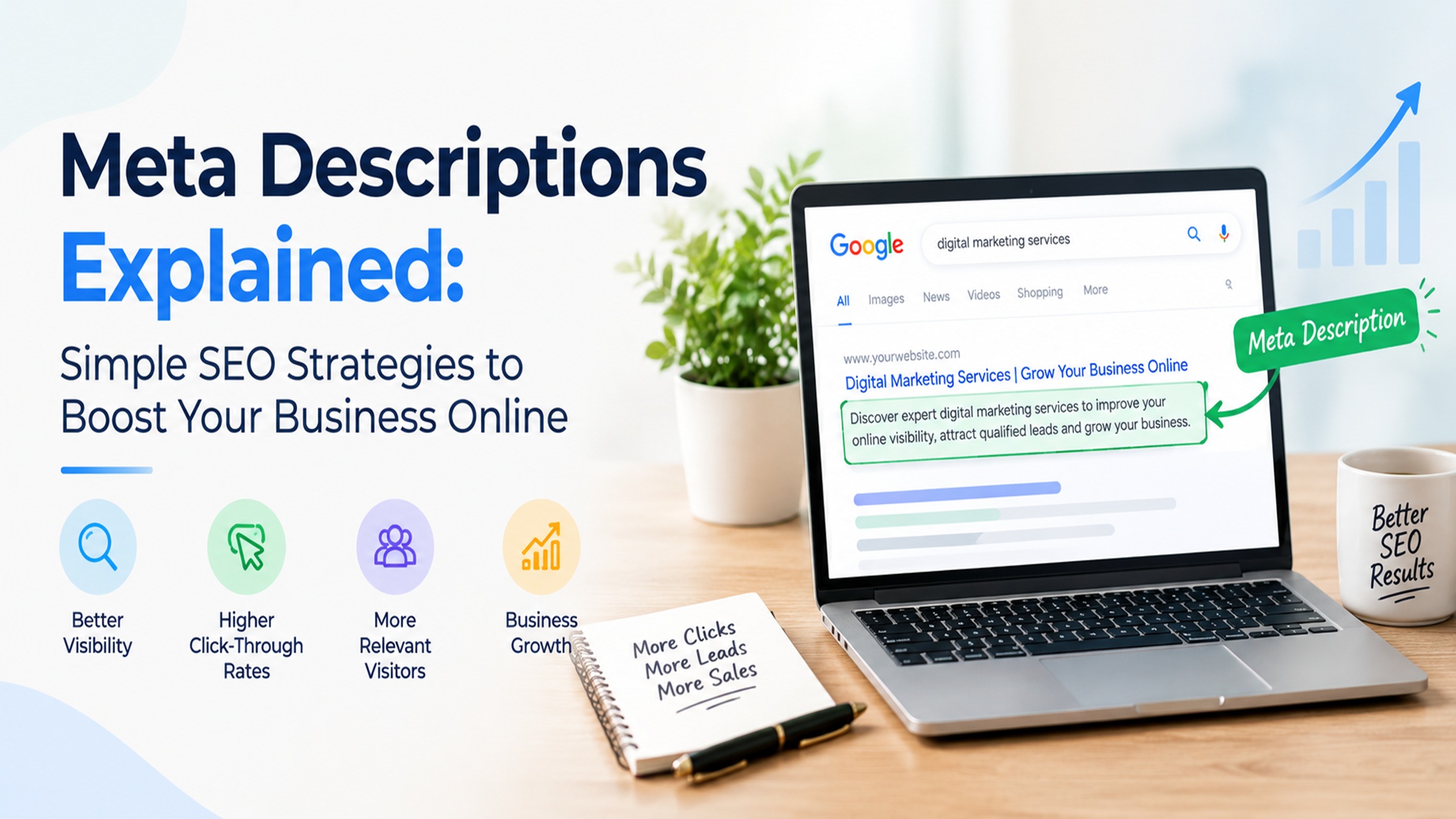
A well-written meta description communicates what a webpage offers and gives users a reason to explore it. Although it is not a direct Google ranking factor, it can influence click-through rates and contribute to a better search experience.
What Is a Meta Description?
A meta description is a short summary of a webpage’s content that search engines may display beneath the page title in search results. It helps users understand what they can expect before visiting your website.
For example, imagine you run a web design and digital marketing company. Your service page might use the following meta description:
Discover professional web design and SEO services that help your business strengthen its online presence, attract customers, and grow faster.
This description highlights the page’s value and encourages potential customers to learn more.
When exploring meta description explained, it is important to understand that you can suggest your preferred description through your website’s HTML, but Google may generate a different snippet depending on the search query and page content.
Why Do Meta Descriptions Matter for Your Business?
Meta descriptions may look like a minor SEO detail, but they can play an important role in how potential customers discover and interact with your business online.
1. Improve Click-Through Rates
Your website competes with several other pages in search results. A clear, relevant, and engaging description can help users understand why your page is worth visiting.
For example, instead of writing “We offer digital marketing services,” you could write, “Grow your online reach with data-driven digital marketing strategies designed to attract qualified leads and increase conversions.”
The second version communicates a clearer benefit and gives users a stronger reason to click.
2. Communicate Your Business Value
Your meta description is an opportunity to explain what makes your product or service useful. You can highlight your expertise, key benefits, or the problem your business solves.
For example, an accounting software company could emphasize faster invoicing, simplified billing, and accurate financial records.
By focusing on customer needs rather than generic promotional language, you can make your search listing more relevant to your target audience.
3. Attract Relevant Website Visitors
More traffic does not automatically mean more business. You want visitors who are genuinely interested in your offerings.
A targeted meta description sets clear expectations about the page’s content. This helps users decide whether your website meets their needs before clicking.
For businesses that depend on qualified leads, relevant traffic can be more valuable than a large number of unrelated visitors.
4. Strengthen Your SEO Strategy
Meta descriptions are not a direct Google ranking factor, and adding keywords to them will not automatically improve rankings. However, they remain a useful part of an effective SEO strategy.
When your descriptions accurately reflect the page content and match the searcher’s intent, they can make your listings more appealing.
A practical approach to meta description explained is to view descriptions as part of your search presentation strategy, working alongside title tags, high-quality content, relevant keywords, and a technically sound website.
5. Build Trust Before the First Click
Users often make quick decisions when scanning search results. A professional, informative description helps communicate credibility and sets realistic expectations.
Avoid exaggerated promises or misleading statements. If your description promises a free consultation, detailed guide, or specific service, ensure the landing page actually delivers it.
Consistency between your search snippet and webpage content creates a more reliable experience for potential customers.
How to Write an Effective Meta Description
Writing a strong meta description does not require complicated SEO techniques. Focus on clarity, relevance, and the value your page provides.
1. Include Your Primary Keyword Naturally
Identify the main keyword you want the page to target and include it where it fits naturally.
For this article, the keyword is “meta description explained.” A suitable description could be:
Meta description explained: Learn how effective meta descriptions support SEO, improve search result clicks, and help your business attract relevant website visitors.
The keyword fits the context without making the sentence awkward.
Remember that keyword stuffing can make descriptions difficult to read. Prioritize natural language and user intent.
2. Focus on Benefits, Not Just Features
Your description should explain why someone should visit your page.
For a web development company, simply stating “We provide web development services” is less informative than highlighting the business outcomes of those services.
Consider what the reader will learn, solve, compare, or achieve by visiting your webpage. Communicating that value makes the description more compelling.
3. Keep It Concise and Relevant
Google does not specify a fixed character limit for meta descriptions. Search snippets are typically truncated according to available space, device width, and other factors.
As a practical starting point, aim for approximately 140–160 characters, while remembering that this is a guideline rather than a strict requirement.
Place the most important information early so that users can understand the page’s purpose even if the snippet is shortened.
4. Write a Unique Description for Every Important Page
Using the same meta description across multiple pages can reduce their usefulness.
Your homepage, service pages, product pages, and blog articles serve different purposes and should have descriptions that reflect their individual content.
- Homepage: Highlight your company’s main offering and overall value.
- Service page: Explain the specific service and the benefits it provides.
- Product page: Emphasize important features, use cases, or differentiators.
- Blog article: Summarize the main topic and what readers will learn.
Unique descriptions make your website’s search listings more informative and relevant.
5. Add a Relevant Call to Action
A suitable call to action can encourage users to take the next step. Depending on the page, you might use phrases such as “Explore our services,” “Discover practical tips,” or “Learn how it works.”
Avoid forcing a call to action into every description. The wording should feel natural and accurately represent what visitors will find.
Meta Description Examples for Different Businesses
The best approach depends on your business model, target audience, and webpage objective.
| Business Type | Example Meta Description |
|---|---|
| Web Design Company | Build a professional website that strengthens your brand, improves user experience, and supports your business growth. Explore our web design services. |
| Digital Marketing Agency | Discover digital marketing strategies to improve online visibility, attract qualified leads, and connect with your target audience. |
| E-commerce Store | Explore quality products, compare your options, and find the right solutions for your everyday needs. Shop our latest collection. |
| Healthcare Software | Simplify appointments, patient records, and practice workflows with digital healthcare management software designed for modern medical professionals. |
| Business Software | Streamline billing, automate routine tasks, and manage business operations more efficiently with practical digital solutions. |
These examples illustrate how a meta description can communicate a page’s purpose while highlighting relevant customer benefits.
Common Meta Description Mistakes to Avoid
Even experienced website owners can overlook small details that reduce the effectiveness of their search listings.
Keyword stuffing: Repeating the same keyword unnecessarily makes your description sound unnatural.
Duplicate descriptions: Reusing identical descriptions across important pages misses opportunities to communicate each page’s unique value.
Misleading claims: Promising benefits or features that the webpage does not deliver can damage user trust.
Generic wording: Descriptions such as “Welcome to our website” provide little information about what visitors will find.
Ignoring search intent: A description for a product page should focus on the product, while a blog description should explain the information readers can expect.
Leaving important pages without descriptions: Search engines can generate snippets automatically, but providing a useful description gives you an opportunity to influence how your page is presented.
Avoiding these mistakes can make your website’s search listings clearer and more useful to prospective customers.
How to Optimize Meta Descriptions for Better Results
Creating a good description is only the first step. Reviewing its performance can help you identify opportunities for improvement.
Understand Your Audience
Consider the questions your target customers ask, the problems they want to solve, and the information they expect from your website.
Use these insights to write descriptions that address real needs rather than relying entirely on promotional language.
Review Search Performance
Tools such as Google Search Console can help you examine impressions, clicks, click-through rates, and average search positions for your pages.
If a page receives many impressions but relatively few clicks, review its title, meta description, search intent, and competing search listings. A description update may help, although low click-through rates can have several causes.
Keep Your Description Aligned With Page Content
Your meta description should accurately summarize the information on the page. If you update a product, introduce a new service, or substantially revise an article, review the description to ensure it remains relevant.
Test Improvements Carefully
When appropriate, update descriptions on selected pages and monitor their performance over time. Consider changes in rankings, search demand, seasonality, and other factors before attributing improvements solely to the description.
This approach helps you make informed SEO decisions rather than relying on assumptions.
Conclusion
Meta descriptions are a small but valuable part of presenting your business in search results. They help users understand what your pages offer, communicate your value, and encourage relevant visitors to explore your website.
With meta description explained, the key lesson is simple: write for people first. Use relevant keywords naturally, highlight meaningful benefits, keep your wording concise, and ensure every description accurately reflects its page.
For businesses looking to improve their online presence, these practical SEO improvements can complement high-quality content, technical optimization, and a user-friendly website. While meta descriptions cannot guarantee higher rankings or more conversions, thoughtful optimization can help your business make a stronger first impression in search results.