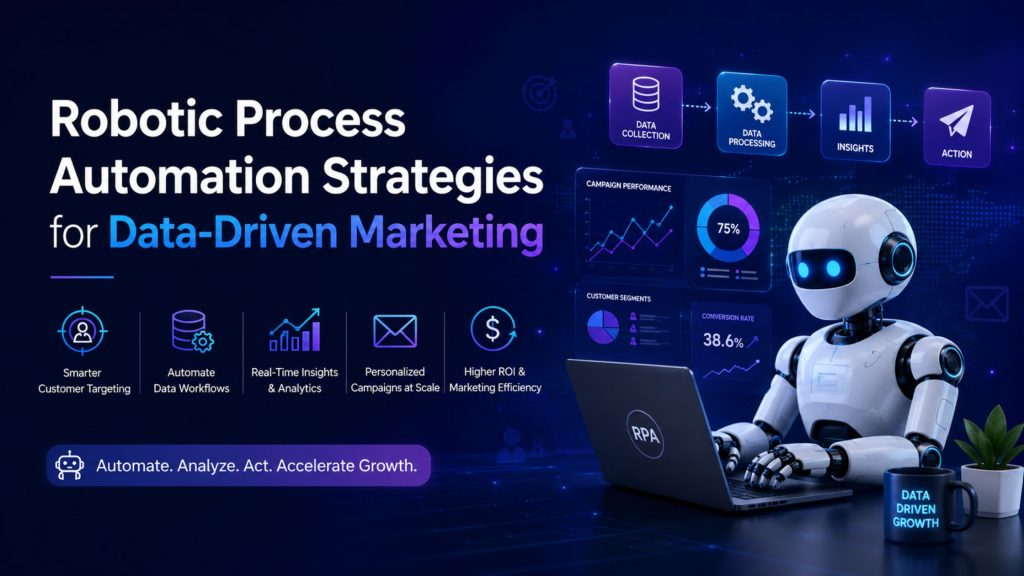
As businesses increasingly rely on analytics, customer insights, and personalized engagement, marketing teams are handling larger volumes of data and repetitive tasks than ever before. From campaign tracking and audience segmentation to reporting and lead management, manual processes can limit efficiency and slow decision-making. This is where Robotic Process Automation (RPA) is transforming modern marketing strategies.
RPA enables businesses to automate rule-based marketing tasks with speed and accuracy, allowing teams to focus more on creativity, strategy, and customer experience. By integrating automation into data-driven marketing workflows, companies can streamline campaign management, improve reporting accuracy, personalize customer interactions, and respond faster to market trends.
As businesses continue investing in digital transformation, RPA is becoming an essential tool for marketers looking to maximize productivity and gain deeper insights from their data. Whether it’s automating CRM updates, generating performance reports, managing customer data, or optimizing lead nurturing processes, RPA helps create smarter and more scalable marketing operations.
In this blog, we’ll explore effective Robotic Process Automation strategies that can help businesses unlock the full potential of data-driven marketing in 2026 and beyond.
The Rise of Robotic Process Automation in Marketing
Robotic Process Automation is gaining traction in the marketing sphere, transforming traditional methodologies. As companies strive for efficiency, RPA offers a solution to repetitive tasks that often bog down teams.
With the explosion of data generated daily, marketers face increasing pressure to analyze and act quickly. RPA tools streamline this process by automating data entry, reporting, and analysis. This means faster decision-making based on real-time insights.
Moreover, as consumer expectations evolve rapidly, brands must adapt their strategies accordingly. RPA empowers marketers to deliver personalized experiences at scale without sacrificing quality or speed. Tasks that once required hours can now be completed in minutes.
The rise of artificial intelligence complements RPA’s capabilities further. Together they enhance precision in targeting audiences while optimizing campaign performance across multiple channels—ultimately leading to more effective marketing outcomes and stronger customer relationships.
Benefits of incorporating RPA into Data-Driven Marketing
Incorporating Robotic Process Automation (RPA) into data-driven marketing offers numerous advantages. One key benefit is increased efficiency. RPA can handle repetitive tasks swiftly, allowing marketers to focus on creative strategies.
Another significant advantage is enhanced accuracy. By minimizing human error in data entry and processing, RPA ensures that insights drawn from analytics are reliable and actionable. This leads to better decision-making based on accurate information.
Additionally, RPA enables scalability in marketing efforts. As businesses grow, so do their data needs. Automating processes allows for seamless integration of new campaigns or channels without overwhelming resources.
Cost savings also play a crucial role. With reduced manual labor and streamlined operations, companies can allocate budgets more effectively across other critical areas.
Implementing RPA fosters improved customer experiences by enabling real-time responses tailored to individual preferences and behaviors.
Utilizing RPA for Customer Segmentation and Personalization
Robotic Process Automation (RPA) offers a transformative approach to customer segmentation and personalization. By automating data collection from various sources, businesses can gain deep insights into customer behaviors and preferences.
With RPA, marketers can analyze vast datasets quickly. This allows them to identify distinct segments based on demographics, purchasing patterns, and engagement levels.
Once segmentation is achieved, RPA tools can help tailor marketing messages for each group. Instead of generic content sent en masse, customers receive personalized communications that resonate with their unique needs.
Additionally, these automated systems continuously learn from new data inputs. This adaptability ensures that the marketing strategies remain relevant as consumer trends evolve over time.
By harnessing RPA in this way, brands not only enhance customer satisfaction but also boost conversion rates significantly through targeted approaches.
Automating Email Marketing with RPA
Email marketing is a powerful tool for businesses, but managing campaigns can be time-consuming. Robotic Process Automation (RPA) offers an efficient solution to streamline these efforts.
Imagine creating personalized email content that speaks directly to each recipient. RPA can analyze customer data and preferences, ensuring the right message reaches the right audience at optimal times.
Automating repetitive tasks such as list segmentation, follow-ups, and performance tracking frees up valuable resources. Marketers can focus on strategy rather than mundane details.
Additionally, RPA tools integrate seamlessly with existing platforms. This means you don’t have to start from scratch; automation enhances your current workflows without disruption.
By leveraging RPA in email marketing, companies not only improve efficiency but also enhance engagement rates. The result? A more targeted approach that resonates with customers.
Enhancing Social Media Strategies through RPA
Social media is a dynamic landscape, and keeping up can be overwhelming. Robotic Process Automation (RPA) offers innovative solutions to streamline your social media strategies.
With RPA, brands can automate content scheduling across multiple platforms. This ensures consistent messaging while freeing up time for creative tasks. Imagine not having to manually post updates or monitor engagement metrics.
Additionally, RPA tools can analyze audience interactions in real-time. By understanding user behavior and preferences, businesses can tailor their content more effectively. Personalized engagement increases follower loyalty and enhances brand reputation.
Engagement tracking becomes seamless as well. Automated reports provide insights into which posts perform best, allowing marketers to adjust their strategies quickly based on data-driven decisions.
Integrating RPA into social media efforts ultimately transforms how brands connect with audiences. It helps maintain a vibrant online presence without the constant manual effort traditionally required.
Challenges and Limitations of RPA in Marketing
While Robotic Process Automation (RPA) offers significant advantages, it’s not without its challenges. One major concern is the initial investment. Implementing RPA can be costly, especially for small businesses trying to adopt new technologies.
Another issue arises from complexity. Integrating RPA with existing systems can lead to compatibility problems and requires careful planning. Businesses may find themselves having to reconfigure their current workflows, which could disrupt operations temporarily.
Data quality also poses a risk. If the data fed into automated processes is inaccurate or incomplete, it can lead to misguided marketing strategies and misinterpretations of customer behavior.
Moreover, there’s resistance from employees who fear job displacement due to automation. This cultural shift needs thoughtful management and communication strategies to ensure buy-in from teams accustomed to traditional methods.
Ongoing maintenance and updates are crucial. As technology evolves, keeping your RPA solutions relevant demands continuous oversight and adaptation.
Best Practices for Implementing RPA in Data-Driven Marketing
When implementing Robotic Process Automation (RPA) in data-driven marketing, start with a clear strategy. Define specific goals that align with your overall marketing objectives.
Next, ensure you have the right technology in place. Choose RPA tools that integrate seamlessly with existing systems and are scalable for future needs.
Training is crucial. Empower your team to understand RPA’s capabilities and limitations. This investment pays off as employees adapt more easily to automated processes.
Data quality cannot be overlooked. Clean, accurate data fuels effective automation and enhances decision-making across campaigns.
Monitor performance regularly. Use analytics to assess how well RPA supports your initiatives and make adjustments as necessary. Continuous improvement will keep your marketing strategies relevant and impactful.
Future Outlook: How RPA will Transform the Marketing Landscape
The future of marketing is on the brink of a revolutionary shift with Robotic Process Automation (RPA) leading the charge. As businesses continue to harness data, RPA will evolve into an essential component for efficiency and insights.
Imagine algorithms that not only automate routine tasks but also analyze consumer behavior in real time. This capability allows marketers to pivot strategies quickly based on emerging trends.
Moreover, as artificial intelligence intertwines with RPA, personalized marketing at scale becomes feasible. Campaigns will adapt dynamically to individual preferences and behaviors without manual intervention.
The integration of RPA will likely empower creative teams by freeing them from mundane tasks, allowing more focus on innovative strategies and brand development. Expect a landscape where human creativity merges seamlessly with automated precision, cultivating deeper connections between brands and consumers.
As these technologies mature, they promise unprecedented agility in responding to market changes while maintaining high-quality customer experiences.
Final Thoughts
Robotic Process Automation (RPA) is reshaping the marketing landscape in profound ways. As businesses embrace data-driven strategies, RPA stands out as a powerful tool that streamlines operations and boosts efficiency.
The rise of RPA has made it possible for marketers to focus on strategic initiatives while automating repetitive tasks. From customer segmentation to targeted email campaigns, the benefits are clear. Marketers can leverage data more effectively, creating hyper-personalized experiences that resonate with audiences.
However, implementing RPA comes with its own set of challenges. Organizations must navigate potential pitfalls such as integration issues and workforce adaptation. By adopting best practices and understanding limitations, businesses can harness the full potential of robotic process automation.
Looking ahead, it’s evident that RPA will continue to evolve within the marketing sector. Its capacity for enhancing customer engagement through social media and other digital channels indicates a bright future for marketers willing to adopt these innovative strategies.
As companies explore Robotic Process Automation Strategies further, they optimize not just their processes but also their relationships with customers—leading to greater satisfaction and loyalty in an increasingly competitive market environment.