
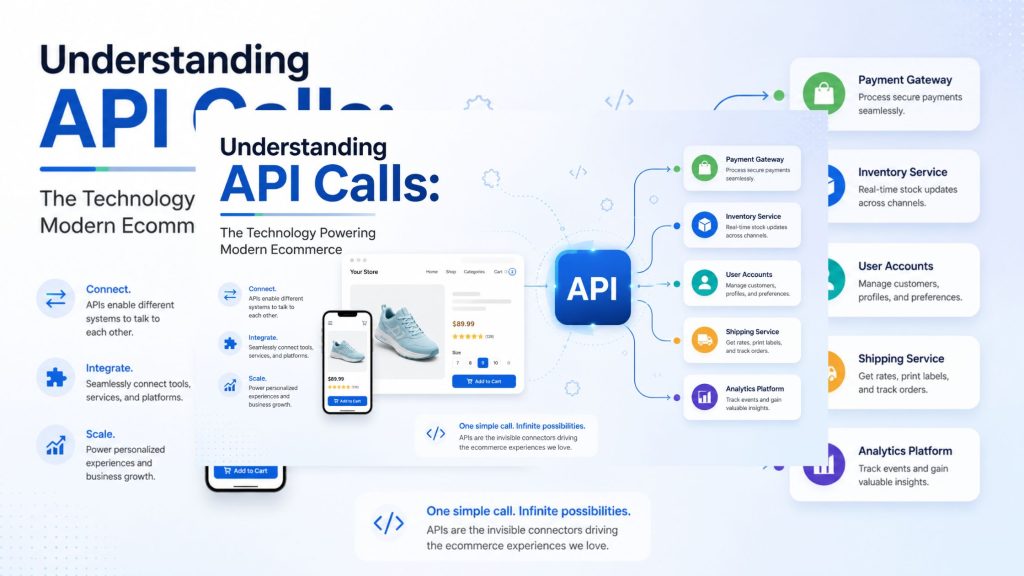
The world of online shopping is changing really fast, and a key part of this change is something called API calls. But what are API calls exactly? Think of them as the hidden links that connect different online services, letting businesses work easily with many platforms. In today’s world, where being quick and efficient is so important, knowing about API calls for online stores is really important. From linking payment systems to connecting inventory tools, APIs help make the shopping experience run smoothly. As we explore this topic more, you’ll see how these digital connections are changing how businesses work on the internet and why they should be a big part of any online store plan. Ready to learn more about API calls in ecommerce? Let’s begin!
What is an API Call?
An API call is a request made by one software application to another, asking for specific data or functionality. Think of it as sending a message to a service that provides the information you need.
When an application needs to communicate with another system—like retrieving user details or processing payments—it uses an API call. The requesting app sends out this call via predefined protocols and formats, often using JSON or XML.
Once the API receives this request, it processes the information and returns a response packed with valuable data. This interaction happens in real-time, enabling applications to function smoothly without any delays.
API calls are fundamental in connecting various services within ecommerce platforms. They allow businesses to leverage third-party tools efficiently while streamlining operations and enhancing customer experiences across digital touchpoints.
The Role of API Calls in Ecommerce
API calls serve as the backbone of modern ecommerce, facilitating seamless interactions between different systems. They enable various platforms—like payment gateways, inventory management systems, and customer relationship tools—to communicate effectively.
When a shopper makes a purchase online, an API call is triggered to verify the transaction with the payment processor. This instant communication ensures that customers receive timely updates on their orders.
Furthermore, APIs allow retailers to integrate third-party services effortlessly. Whether it’s adding shipping options or connecting with analytics tools, these calls streamline operations without requiring substantial development time.
The result? A smoother shopping experience for users and more efficient processes for businesses. As ecommerce evolves, leveraging API calls will be essential for staying competitive in a fast-paced market.
5 Best eCommerce APIs for 2026
As we look toward the future of eCommerce, several APIs are set to redefine online shopping experiences in 2026.
First up is Shopify’s API. Known for its robust capabilities, it allows seamless integration with various platforms while offering extensive customization options.
Next, consider Stripe’s payment processing API. It’s designed for speed and security, making transactions smoother and more reliable for businesses and customers alike.
Another standout is BigCommerce’s API. It enables rapid scaling of online stores without compromising performance or user experience.
For inventory management, the TradeGecko API shines bright. This tool simplifies stock tracking across multiple sales channels efficiently.
WooCommerce’s REST API offers flexibility that small to medium-sized businesses crave. It supports custom features tailored specifically to unique business needs.
These APIs will play pivotal roles in shaping how eCommerce evolves over the next few years.
Benefits and Limitations of Using API Calls
API calls offer remarkable benefits for modern ecommerce. They enable seamless integration between different platforms, allowing businesses to streamline operations. This means faster transactions and an enhanced user experience.
Moreover, APIs can provide real-time data access. Companies can retrieve current inventory levels or process payments instantly. Such efficiency is crucial for meeting customer expectations in today’s fast-paced market.
However, API calls come with certain limitations. Security concerns are significant; sensitive data may be exposed if not properly managed. Businesses must ensure robust authentication measures are in place to safeguard information.
Additionally, dependency on third-party services can create vulnerabilities. If a service goes down or changes its terms of use, it may disrupt your operations significantly.
Understanding both the advantages and drawbacks helps businesses make informed decisions about integrating API calls into their ecommerce strategies.
Best Practices for Implementing API Calls
When implementing API calls, clarity is crucial. Start by documenting every aspect of your API. This ensures everyone on your team understands how it works and its intended purpose.
Limit the number of requests to avoid overwhelming servers. Implement a caching strategy to store frequently accessed data temporarily. This can significantly improve performance and user experience.
Error handling should not be overlooked. Always anticipate potential issues and provide meaningful error messages that guide users toward solutions.
Security remains paramount in handling sensitive information. Use secure protocols like HTTPS, along with robust authentication methods such as OAuth.
Monitor usage metrics consistently. Analyzing these will help you identify bottlenecks or inefficiencies in real-time, allowing for timely adjustments to enhance performance further.
The Future of API Calls in Ecommerce
The future of API calls in ecommerce is poised for transformative growth. As businesses increasingly rely on data integration, the demand for seamless connectivity will rise.
Emerging technologies like AI and machine learning are set to enhance API capabilities. These advancements can lead to smarter interactions and personalized shopping experiences.
Moreover, as mobile commerce expands, APIs must adapt to ensure responsiveness across devices. This adaptability will be crucial for retaining customer engagement.
Security will also play a pivotal role. With rising cyber threats, robust authentication measures are becoming essential in safeguarding transactions and user data.
The shift toward headless commerce models indicates that flexibility in API design is necessary. Brands aiming for agility must prioritize creating versatile APIs that cater to various platforms without compromising performance or security.
Categories Of API For Ecommerce Success
When diving into API calls for modern ecommerce, it’s essential to understand the categories that can drive success.
Payment APIs are crucial, allowing seamless transactions between customers and merchants. They enhance security while providing multiple payment options.
Inventory management APIs streamline stock control by connecting online platforms with warehouse systems. This ensures real-time updates on product availability.
Shipping APIs simplify logistics by integrating shipping providers directly into your platform. They help in tracking shipments and calculating delivery times efficiently.
Customer relationship management (CRM) APIs play a pivotal role in managing customer interactions. These tools personalize user experiences and improve engagement through tailored marketing efforts.
Analytics APIs provide insights into consumer behavior and sales trends. Data-driven decisions can significantly impact business growth when leveraging these analytics effectively. Each of these categories contributes uniquely to building a robust ecommerce strategy.
How To Select The Best APIs For Your Business
Choosing the right APIs for your business is crucial. Start by assessing your specific needs. Consider what functionalities are essential to enhance your ecommerce platform.
Next, research available options. Look for APIs that align with these requirements and offer flexibility. Compatibility with existing systems can save you time and headaches down the line.
Evaluate the documentation provided by API developers. Clear, comprehensive guides facilitate easier integration and troubleshooting.
Don’t overlook scalability. As your business grows, so should your API capabilities. Select solutions that can adapt to increasing demands without a complete overhaul.
Examine support services offered by providers. Strong customer support can be invaluable when issues arise or changes need to be made quickly in this fast-paced digital landscape.
Final Thought
As we delve deeper into the digital landscape, understanding API calls for modern ecommerce becomes increasingly crucial. These powerful tools bridge various systems and services, enabling seamless interactions between businesses and customers.
The role of APIs in ecommerce cannot be overstated. They allow for real-time data exchange, enhance user experiences, and streamline operations. With a plethora of options available, selecting the right APIs tailored to your business needs is vital.
Embracing best practices can help you maximize the benefits while minimizing limitations associated with API usage. As technology continues to evolve, so too will the landscapes surrounding these essential components of modern commerce.
Looking ahead, innovations in API design and functionality promise exciting opportunities for enhanced customer engagement and operational efficiency. Leveraging these advancements will ensure that your business remains competitive in an ever-changing market.
Investing time in understanding API calls equips businesses with valuable insights that pave the way for future success. The integration of robust APIs could very well define what it means to thrive in today’s ecommerce environment.